Canelé (French Bordeaux Pastry)
Canelé, also known as Cannelés de Bordeaux is a small French pastry with a distinctive cylindrical shape, has its origins in Bordeaux. This pastry is known for its caramelized crust and custard-like interior. Despite its simplicity, canelé offers a rich experience in flavor and texture, making it a popular choice in patisseries and cafes.

Characteristics of Canelé
The canelé is characterized by its dark, almost burnt crust, which contrasts with the soft, tender center. This contrast is achieved through a specific baking process. Traditionally, they are baked in copper molds coated with beeswax, contributing to the unique texture and flavor. You can view the history of the pastry here.
These pastries tend to be lower in calories, ranging from 50 to 150 calories depending on size.

Serving Suggestions
Canelé can be served at various temperatures. When warm, they offer a softer, more aromatic experience. At room temperature, the flavors are more balanced, making it suitable for pairing with other beverages or desserts. Chilled canelé provides a firmer texture, ideal for those who prefer a denser bite.
Pairings for Canelé
- With Coffee or Tea: Canelé pairs exceptionally well with coffee or tea. The bitterness of coffee or the subtleness of tea complements the sweetness of the canelé, making for a balanced flavor profile.
- Wine Pairings: In its region of origin, canelé is often paired with sweet white wines like Sauternes or Loupiac. The sweetness of these wines harmonizes with the caramelized exterior of the canelé.
- As Part of a Dessert Platter: Canelé can be included in a dessert platter, alongside fruits, nuts, and cheeses. The variety of flavors and textures makes for an engaging dessert experience. Try them alongside some French Crullers.
- With Ice Cream or Custards: For a more indulgent treat, canelé can be served with ice cream or custard. The contrast between the cold creaminess of the ice cream and the warm, chewy texture of the canelé creates a delightful combination.
Tips for Making Perfect Cannelés
Preparing Canelé is often thought of as challenging because of the need to get the perfect crispy outside and soft inside. I think it really just requires patience to chill the batter, prepare the molds, etc. Just don’t cut corners and it will be fine. Understanding the key elements in their preparation is essential for achieving the desired texture and flavor. Here are some tips for those looking to craft perfect canelés:
- Choosing the Right Molds: Traditionally, canelés are baked in copper molds which are known for their excellent heat conduction. These molds are instrumental in achieving the signature caramelized crust. If copper molds are not available, silicone molds can be used as an alternative, though the results may slightly differ in texture. You can purchase Canelé Molds here on Amazon.
- Coating the Molds: Properly coating the molds is crucial. Beeswax mixed with butter is traditionally used to coat the inside of the molds. This not only prevents sticking but also contributes to the unique crust of the canelé. Ensure the coating is even but not too thick.
- Batter Resting Time: The batter for canelés should be prepared in advance and allowed to rest, ideally overnight. This resting period allows the flour to fully hydrate and results in a more consistent texture.
- Oven Temperature: Baking canelés involves starting with a high oven temperature to achieve the crust and then lowering it to cook the interior properly without burning the exterior. This dual-temperature method is key to their unique texture. Don’t open the oven during baking! You want a uniform temperature, and opening the oven a bunch changes the heat.
- Avoid Overmixing: When preparing the batter, mix just until the ingredients are combined. Overmixing can lead to the development of gluten, which might affect the custardy interior of the canelé.
- Filling the Molds: Fill the molds almost to the top, but leave a small space to allow the batter room to expand. This ensures the distinctive shape and prevents overflow during baking.
- Monitoring the Bake: Keep a close eye on the cannelés during baking. The exterior should be a deep amber color, but not burnt. Each oven varies, so it’s important to adjust the baking time accordingly.
- Cooling: Once removed from the oven, let the cannelés cool for a few minutes in the mold before unmolding. This helps maintain their shape. However, do not let them cool completely in the molds, as this can make them soggy.
- Freshness: Cannelés are best enjoyed fresh, ideally within a few hours of baking. This is when their unique texture and flavors are most pronounced.
By following these tips, one can achieve the perfect balance of a crunchy, caramelized exterior and a soft, custardy interior that makes canelé a beloved pastry.

Storage and Freshness
Canelé is best enjoyed fresh. However, they can be stored in an airtight container at room temperature for up to two days. Reheating in an oven for a few minutes can help revive the crispness of the exterior.
In sum, Canelé, with its unique blend of textures and flavors, offers a versatile dessert experience. Whether paired with a beverage, enjoyed as part of a larger dessert spread, or savored on its own, this French pastry is a testament to the sophistication and simplicity of traditional French baking. Its ability to complement a wide range of flavors makes it a timeless choice for both casual and formal occasions.
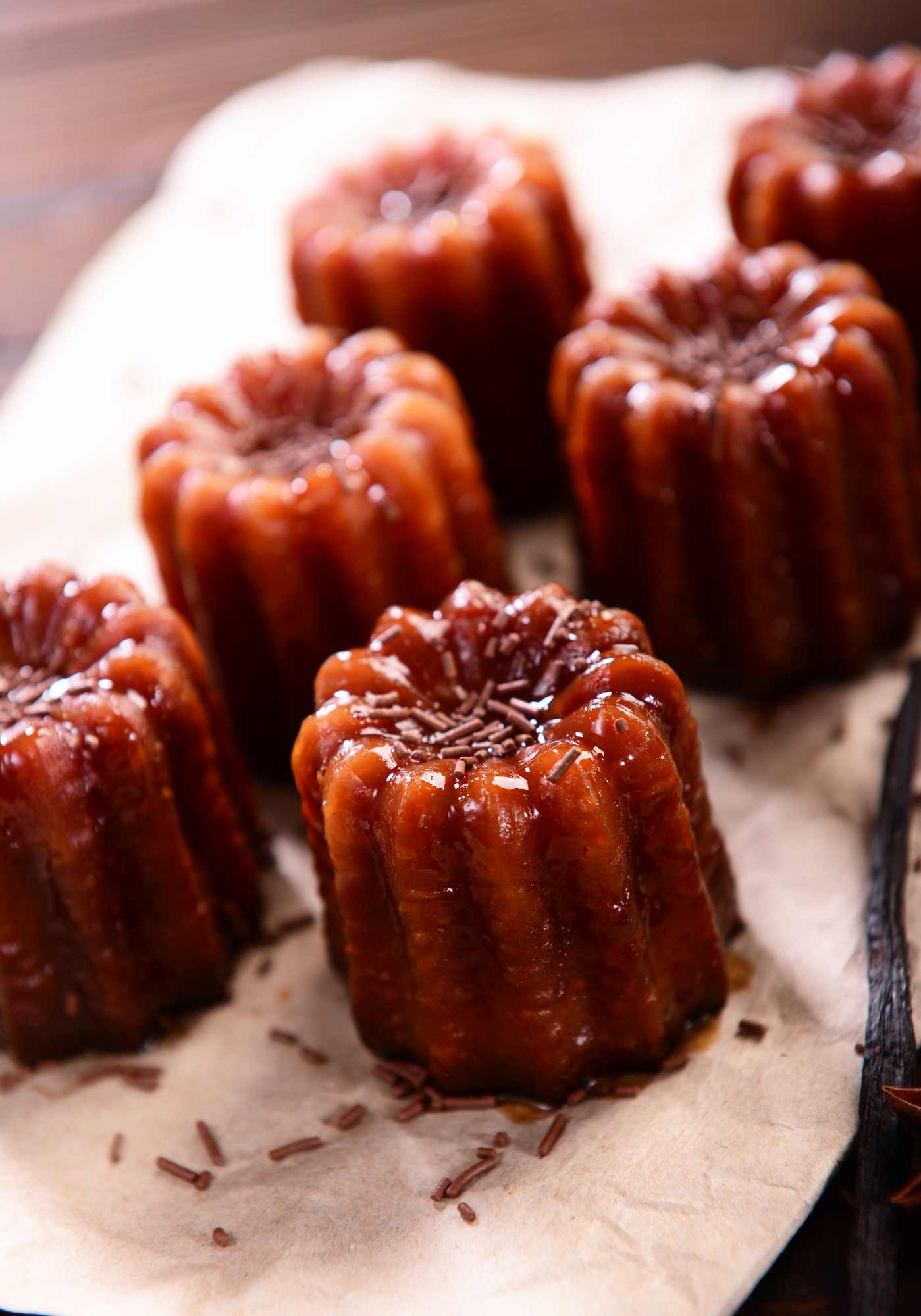
Below is a Canelé recipe.
Enjoy your cannelés warm or at room temperature. They are best consumed the same day they are baked. Remember, the key to perfect canelés is the contrast between the crispy, caramelized exterior and the soft, custardy interior. Happy baking!
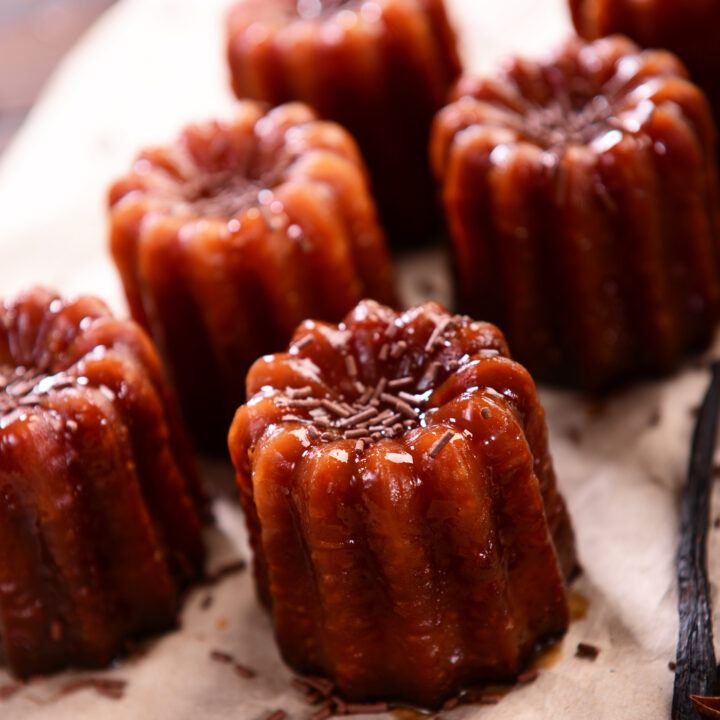
Canelé (French Pastry)
Canelé, also known as Cannelés de Bordeaux is a small French pastry with a distinctive cylindrical shape, has its origins in Bordeaux. This pastry is known for its caramelized crust and custard-like interior.
Ingredients
- Whole milk: 500 ml (about 2 cups)
- Butter: 50 g (about 3.5 tablespoons), plus extra for greasing the molds
- Vanilla bean: 1, split and scraped (or 2 teaspoons vanilla extract)
- Eggs: 2, large
- Egg yolks: 2, large
- Confectioners Sugar: 250 g (about 1 1/4 cups)
- All-purpose flour: 125 g (about 1 cup)
- 1/4 teaspoon sea salt
- Dark rum: 50 ml (about 3.5 tablespoons)
- Beeswax: for coating the molds (optional, can use butter)
Instructions
Prepare the Batter:
- Heat the milk with the butter and the scraped vanilla bean (or vanilla extract) in a saucepan until just boiling. Remove from heat.
- In a separate bowl, whisk together the eggs, egg yolks, salt, and sugar until smooth.
- Gradually add the flour to the egg mixture, whisking continuously to avoid lumps.
- Slowly incorporate the hot milk mixture into the egg mixture, whisking constantly.
- Stir in the dark rum.
- Strain the batter through a fine-mesh sieve to remove any lumps and the vanilla bean if used.
- Cover and refrigerate the batter for at least 24 hours, up to 48 hours.
Prepare the Molds:
- If using beeswax, melt it with an equal amount of butter. Brush the insides of the molds thoroughly with the beeswax mixture or melted butter.
- Chill the molds in the refrigerator or freezer until ready to use.
Baking:
- Preheat your oven to 240°C (475°F).
- Fill the chilled molds almost to the top with the batter.
- Place the molds in the oven and bake for 10-12 minutes at 240°C (475°F), then reduce the temperature to 180°C (350°F) and bake for another 50-60 minutes. The canelés should have a dark caramelized crust and a custardy interior.
- Regularly monitor the canelés during baking, as oven temperatures may vary.
Cooling:
- Remove the canelés from the oven and let them cool in the molds for a few minutes.
- Unmold them onto a wire rack to cool completely.
Nutrition Information:
Yield: 12Amount Per Serving: Calories: 100
Last Updated on December 8, 2023 by Carleen