Garbure, French Ham and Vegetable Stew
Garbure is a hearty French ham and vegetable stew or soup that originates from the Gascony region in southwest France. Historically consumed by peasants, this dish is a blend of various vegetables and meats, often incorporating cabbage as a primary ingredient.

Over time, Garbure has evolved and regional variations have sprung up, but the essence of Garbure remains rooted in the rustic and flavorful combination of locally sourced ingredients. You can learn more about the history of Garbure here.
Key Ingredients in Garbure
While the specific ingredients in Garbure can vary depending on regional and family recipes, a few common components include:
- Vegetables: Cabbage is a staple, but other vegetables such as carrots, green beans, parsnips, turnips, and potatoes are often included.
- Beans: Beans are often included. Usually white beans.
- Meats: Varieties of meat, including duck, ham, and sometimes even fish, are added to give depth to the soup. However, ham, especially ham hock, is the traditional meat to use.
- Broth: Typically a robust chicken or beef stock, though other varieties can be used.
Serving Suggestions

When it comes to serving Garbure, it’s essential to keep in mind the dish’s hearty nature. Here are some recommendations:
Dish Selection: Use deep soup bowls to accommodate the dense and chunky consistency of Garbure. The dish should comfortably hold the mix of vegetables and meats without overcrowding.
Accompaniments: Given the richness of Garbure, it’s best paired with crusty bread, such as a baguette, to complement its textures. The bread can be used to sop up the flavorful broth, enhancing the dining experience. For example, try serving it with toasted Kartoffelbrot, which is a hearty German potato bread. It can also be served with crackers.
Wine Pairing: A robust red wine, preferably from the Gascony region, pairs beautifully with Garbure. Or consider any hearty red wine that can stand up to the soup’s hearty flavors.
Temperature: Garbure is best served hot. Given its dense composition, it retains heat well. Ensure it’s sufficiently warmed before serving to bring out the fullness of its flavors.
Garnish: While Garbure is typically rich and flavorful on its own, a sprinkle of fresh chopped parsley can add a pop of color and a hint of freshness to the dish.
Portion Size: Given the hearty nature of the dish, moderate portion sizes are recommended. It can be quite filling, so it’s essential to account for this when serving, especially if there are additional courses to follow.
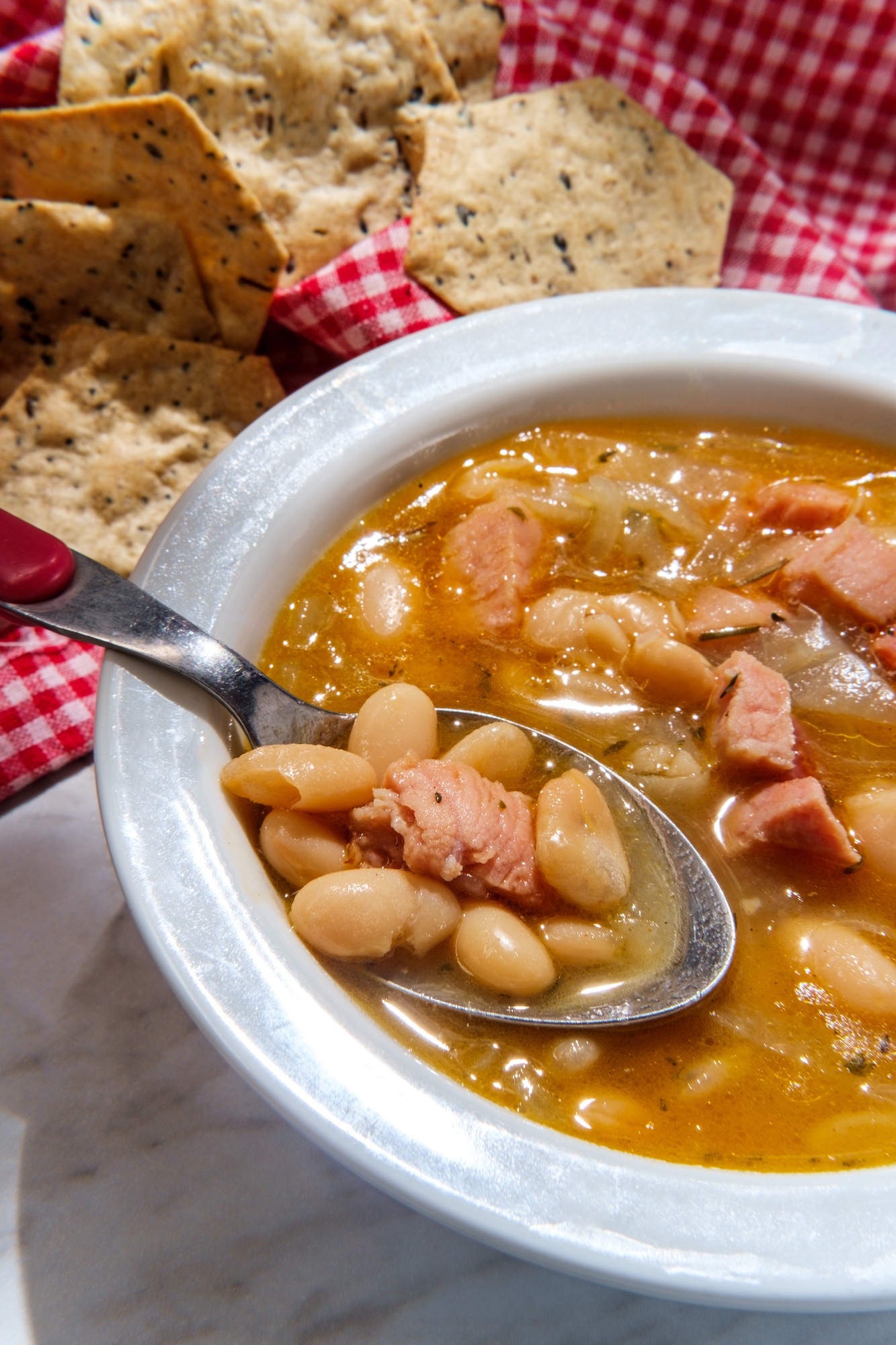
In sum, Garbure is a reflection of Gascony’s culinary tradition, emphasizing the use of local ingredients and hearty flavors.
The below recipe includes an overnight soak of the beans. You can omit the beans or use canned beans to shorten the need to prepare the beans ahead of time. You can also feel free to add or subtract vegetables based on your personal preferences.
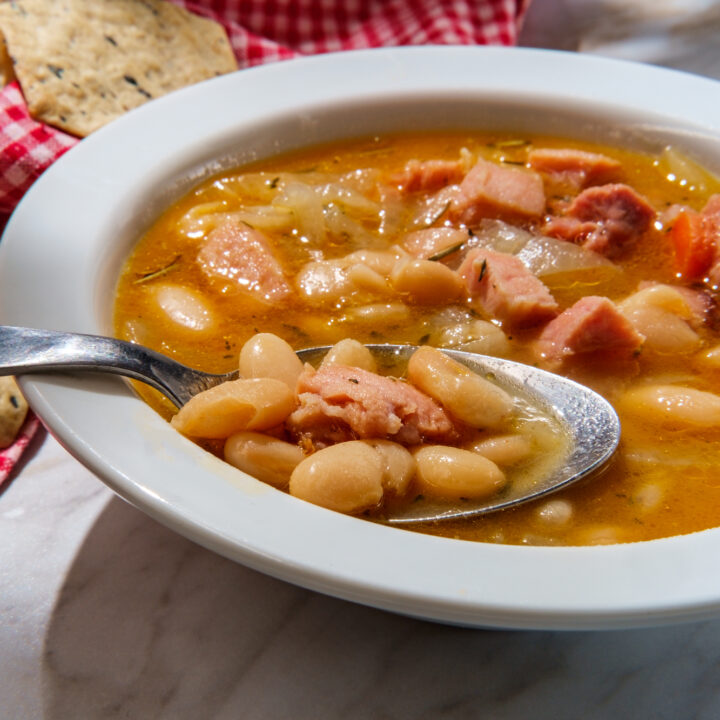
Garbure, French Ham and Vegetable Stew
Garbure is a hearty French ham and vegetable stew or soup incorporating a blend of various vegetables and often includes beans or cabbage. It is a flexible recipe and can be varied based on what you ahve in your kitchen.
Ingredients
- 4 oz dried cannellini beans
- 1 cross-cut smoked ham hock
- 6 oz turnip, cubed
- 1 cup onion, chopped
- 4 cups Savoy cabbage, thinly sliced
- 6 oz red potatoes, cubed
- 1 large carrot, cubed
- 1 ½ cups leek, thinly sliced
- 5 garlic cloves, 1 halved and the rest chopped
- ¼ cup fresh flat-leaf parsley, finely chopped
- 4 cups no-sodium chicken stock
- 1 ½ tsp cider vinegar
- ½ tsp herbes de Provence
- 1 bay leaf
- 2 tbsp fresh thyme, finely chopped
- 1 tbsp extra virgin olive oil
- 1 tbsp butter, softened
- 6 slices country bread, toasted or crackers for serving
Instructions
- Rinse the beans under running water and drain it out into a large pot or Dutch oven.
- Pour in enough water so that it stands a couple of inches above the beans and place a lid on top cover.
- Let it soak overnight or at least for 8 hours; drain it out into a bowl.
- Wipe the Dutch oven with a kitchen towel to dry it out and place it over medium heat.
- Drizzle oil into it and tilt the pan slightly to spread it evenly.
- Heat the oil until it shimmers and throw in the onions.
- Place a lid on top to cover and cook the onions for 8 minutes, while stirring it from time to time until they turn soft.
- Stir in the chopped garlic as well as leeks and continue to sauté for another 2 minutes, stirring periodically, until the mixture turns fragrant.
- Add the beans, bay leaf and ham hock into the mixture and pour in the chicken stock.
- Sprinkle herbes de Provence over them and stir all the ingredients together to mix well.
- Bring the stew to a boil and reduce it to a simmer.
- Cover with a lid and continue to simmer for an hour or until the beans are cooked al dente.
- Drain out the ham hock and set aside on a chopping board until cool enough to touch
- Separate meat from the bones and throw the latter away along with the fat.
- Drop the potato, carrot as well as turnip chunks into the simmering stew and cook further for another 10 minutes or until they are cooked through.
- Fold in the shredded cabbage and simmer for 4 more minutes.
- Sprinkle the chopped fresh herbs, salt and pepper on top, followed by a splash of vinegar.
- Stir them into the stew until well combined and cook for another minute.
- Meanwhile, rub cut sides of the halved garlic onto the toasted slices and smother them with a thin layer of butter.
- Divide the meat among serving bowls and ladle the stew over them.
- Serve hot alongside the toasted garlic-flavored bread slices or with crackers.
Notes
You can use canned beans to omit the overnight bean soak if desired.
Last Updated on October 31, 2023 by Carleen